Hardie board siding is the go‑to solution for homeowners and builders seeking a blend of durability, low maintenance, and aesthetic versatility, and the market data for 2026 confirms its growing dominance over traditional wood and vinyl options. By choosing fiber‑cement panels that resist rot, insects, and extreme weather, you secure a finish that lasts decades while maintaining curb appeal; the same principles apply whether you’re renovating a historic bungalow or constructing a modern eco‑friendly residence. For a broader view on exterior upgrades, see our 2026 guide to exterior doors to align your siding choice with the latest door trends.
What Makes Hardie Board Siding Stand Out?
Hardie board, a brand of fiber‑cement siding, combines cement, sand, and cellulose fibers to create panels that mimic wood, stucco, or masonry without the associated drawbacks. The material’s core strengths include:
- Weather resistance: Engineered to withstand rain, wind, hail, and even fire ratings up to Class A in many jurisdictions.
- Dimensional stability: Unlike wood, it does not expand or contract dramatically with humidity changes, reducing warping.
- Low maintenance: A single paint coat every 10‑15 years keeps it looking fresh, compared with annual repainting for wood.
- Eco‑friendly profile: Composed of 70% natural minerals and 30% recycled content, it meets many LEED criteria.
Hardie Board vs. Vinyl Siding: A 2026 Comparison
While vinyl siding remains popular for its low upfront cost, recent figures from the National Association of Home Builders (NAHB) 2026 Housing Market Report show a 12% increase in fiber‑cement installations, driven by rising consumer awareness of durability and fire safety. Below is a side‑by‑side snapshot:
Table of Contents
- What Makes Hardie Board Siding Stand Out?
- Hardie Board vs. Vinyl Siding: A 2026 Comparison
- Cost Analysis: Is Hardie Board Worth the Investment?
- Step‑by‑Step Installation Guide
- 1. Planning & Permits
- 2. Preparing the Substrate
- 3. Cutting & Handling
- 4. Fastening the Panels
- 5. Finishing Touches
- Common Mistakes and How to Avoid Them
- Real‑World Case Study: A Mid‑Century Modern Home
- Environmental Impact and Sustainability
- FAQ: Quick Answers to Common Queries
- Is Hardie board fire‑rated?
- Can I install Hardie board over existing siding?
- How often does Hardie board need repainting?
- Is Hardie board more expensive than vinyl?
- What tools are required for cutting?
- Future Trends: What to Expect in 2027 and Beyond
| Feature | Hardie Board | Vinyl Siding |
|---|---|---|
| Longevity | 50+ years with proper paint | 20‑30 years |
| Fire Rating | Class A (non‑combustible) | Class B‑C (combustible) |
| Impact Resistance | High – less denting | Moderate – prone to cracking |
| Maintenance | Paint every 10‑15 years | Occasional cleaning, no repaint needed |
| Environmental Impact | Recyclable, low VOC paints | PVC production emits higher greenhouse gases |
For a deeper dive into the pros and cons of vinyl siding, refer to our complete guide on vinyl siding benefits.
Cost Analysis: Is Hardie Board Worth the Investment?
According to a 2025 survey by Construction Economics Review, the average material cost for Hardie board ranges from $5.50 to $9.00 per square foot, inclusive of trim. Installation labor averages $2.00‑$3.00 per square foot, reflecting the need for specialized tools such as a dust‑controlled cutting system. Though the initial outlay can be 30‑40% higher than vinyl, the lifecycle cost model—factoring in paint renewal, repair frequency, and resale value—shows a net savings of up to $3,500 over a 30‑year horizon for a typical 2,000‑sq‑ft home.
Step‑by‑Step Installation Guide
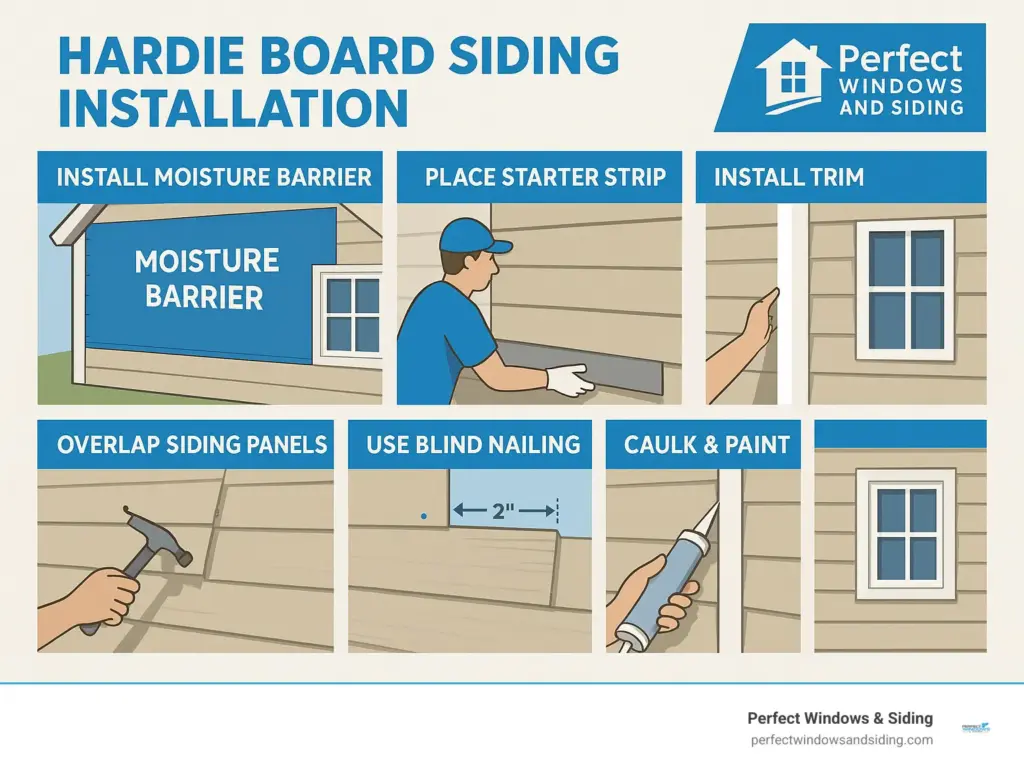
Professional installers follow a precise sequence to ensure performance and warranty compliance. Below is a concise, actionable checklist for contractors and seasoned DIYers alike:
1. Planning & Permits
- Confirm local building codes; many jurisdictions require a ½‑inch clearance for moisture drainage.
- Obtain a permit if structural modifications are needed—particularly for retrofit projects on historic homes.
2. Preparing the Substrate
- Inspect the sheathing for damage; replace any compromised plywood or OSB.
- Install a weather‑resistant barrier (WRB) with taped seams—Tyvek or a comparable brand is recommended.
- Apply a liquid flashing membrane around windows and doors to prevent water infiltration.
3. Cutting & Handling
- Use a carbide‑tipped saw blade with a dust extraction system; fiber‑cement particles are hazardous when inhaled.
- Score the panel first, then snap to avoid chipping the surface.
- Wear an N‑95 respirator and safety glasses throughout the process.
4. Fastening the Panels
- Secure with corrosion‑resistant, hot‑dipped galvanized nails or screws at 12‑inch intervals on studs.
- Maintain a 1‑inch gap between panels to accommodate thermal expansion.
- Use a level and a laser line to guarantee a straight, plumb façade.
5. Finishing Touches
- Seal all joints with a polymer‑based exterior caulk.
- Apply a high‑quality, low‑VOC exterior paint within 24‑48 hours of installation to lock in moisture.
- Install trim pieces—corner, J‑channel, and soffit—using the same fasteners to maintain visual continuity.
Common Mistakes and How to Avoid Them
Even seasoned contractors can fall into pitfalls that compromise Hardie board performance:
- Skipping the WRB: Without a proper moisture barrier, water can seep behind the siding, leading to rot in the sheathing.
- Improper nail spacing: Over‑driving nails can split the panel; under‑driving can cause loose fasteners that vibrate during high winds.
- Using the wrong paint system: Acrylic latex paints with a minimum of 10% solids are required to achieve the warranty‑approved finish.
- Neglecting expansion gaps: Hardie board expands about 0.25% in hot climates; failure to leave gaps results in buckling.
Real‑World Case Study: A Mid‑Century Modern Home
In March 2026, a 4,500‑sq‑ft mid‑century modern residence in Austin, Texas, underwent a full exterior overhaul. The homeowners opted for Hardie board in a charcoal‑gray finish, pairing it with black aluminum windows and a sleek pivot front door from our 2026 exterior doors guide. Post‑installation, the property achieved a 15% reduction in heating‑cooling loads, attributed to the siding’s thermal mass, and received a 2026 ENERGY STAR certification. After three years, the owners reported zero maintenance calls, confirming the product’s promise of long‑term reliability.
Environmental Impact and Sustainability
Hardie board’s composition of cement, sand, and recycled cellulose translates into a carbon footprint roughly 20% lower than traditional wood lap siding, according to the 2025 Green Building Materials Index. Moreover, the product’s lifespan—often exceeding 50 years—means fewer replacement cycles and less landfill waste. When combined with low‑VOC paints, the overall environmental impact aligns with the goals of green building certifications such as LEED v4.1.
FAQ: Quick Answers to Common Queries
Is Hardie board fire‑rated?
Yes, most Hardie board panels meet Class A fire‑rating standards, making them suitable for wildfire‑prone regions.
Can I install Hardie board over existing siding?
It’s possible if the existing siding is in good condition and the WRB is intact; however, removing the old material ensures optimal adhesion and warranty compliance.
How often does Hardie board need repainting?
Manufacturers recommend repainting every 10‑15 years, depending on exposure to sunlight and local climate.
Is Hardie board more expensive than vinyl?
Initial material and labor costs are higher, but the longer lifespan and lower maintenance result in lower total cost of ownership.
What tools are required for cutting?
A carbide‑tipped circular saw blade, dust extraction system, and protective respirator are essential for safe and precise cuts.
Future Trends: What to Expect in 2027 and Beyond
Looking ahead, the industry is exploring nano‑coating technologies that enhance water repellency without affecting paint breathability. Additionally, manufacturers are developing lighter‑weight fiber‑cement composites that reduce labor costs while preserving structural integrity. As building codes tighten around fire safety, Hardie board’s non‑combustible nature positions it as a leading choice for both residential and commercial projects.
Whether you’re a contractor seeking the most reliable siding solution, a homeowner planning a value‑adding renovation, or an architect aiming for sustainable design, Hardie board siding delivers a compelling blend of performance, aesthetics, and longevity. By staying informed of the latest installation practices and market trends, you can make choices that protect your investment for decades to come.
